
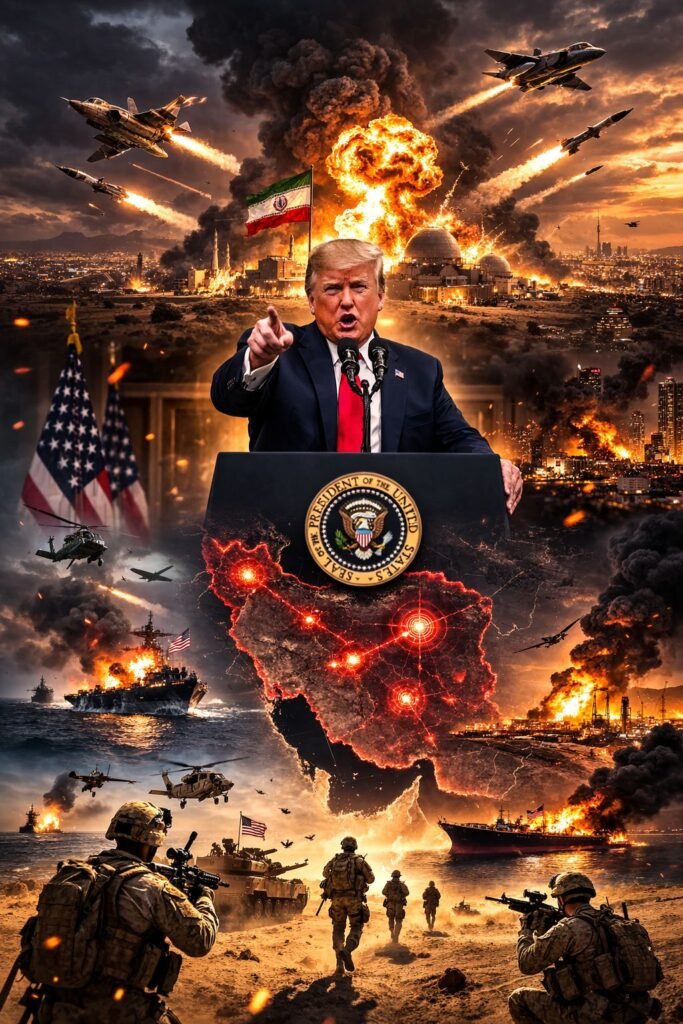

The early months of 2026 have witnessed a geopolitical earthquake that has redefined the power dynamics of the 21st century. As the Middle East war enters its second week of high-intensity combat, the world remains fixed on the rhetoric coming from Washington and the smoke rising over Tehran. With the launch of Operation Epic Fury, the United States and its regional allies have transitioned from a policy of containment to one of direct, decisive engagement.
President Donald Trump’s recent declaration—“The big one is coming”—has served as a chilling harbinger for the Iranian regime. This article explores the strategic architecture of the current conflict, the economic fallout, and the potential long-term outcomes of a war that many analysts believe will either secure a new era of regional stability or trigger a global energy crisis.
I. The Strategic Blueprint: What is Operation Epic Fury?
Operation Epic Fury is not a traditional campaign of attrition. It is a multi-domain military operation designed to achieve total technological and structural dominance over the Iranian military apparatus in a condensed timeframe. Unlike previous “forever wars,” the current administration has framed this as a “surgical decapitation with a sledgehammer.”
1. The Decapitation Strike
The conflict began with an unprecedented intelligence and kinetic success: the neutralized leadership of the Islamic Republic. The February 28 strike on the Pasteur Street district in Tehran removed the Supreme Leader and a significant portion of the Guardian Council from the board. This “leadership vacuum” was intended to trigger a collapse in the chain of command, though remnants of the IRGC (Islamic Revolutionary Guard Corps) have continued to coordinate localized resistance.
2. Neutralization of the “Axis of Resistance”
A primary pillar of the Middle East war is the systematic dismantling of Iran’s proxy network. By targeting the financial hubs and clandestine shipping routes that fuel groups across Lebanon, Yemen, and Iraq, Operation Epic Fury aims to isolate Tehran. Without the ability to project power through its “Axis of Resistance,” the Iranian state is forced to fight a conventional war—a scenario where U.S. and Israeli technological superiority is most pronounced.
II. “The Big One”: Analyzing the Impending Escalation
When the President warns that “the big wave hasn’t even happened yet,” military strategists point to a specific type of warfare: The Total Infrastructure Blackout.
The Cyber and Electronic Frontier
Before the “Big One” kinetic strikes occur, the U.S. is expected to deploy advanced electronic warfare (EW) and cyber-attacks to blind Iranian radar and communication networks. The goal is to create a “silent sky” over the Persian Gulf, allowing stealth bombers to operate with zero risk of detection.
The Target List
“The Big One” likely refers to a coordinated strike on the following:
- Hardened Nuclear Sites: Deep-underground facilities that require “bunker-buster” munitions.
- Ballistic Missile Silos: The mobile and stationary launchers that represent Iran’s primary deterrent.
- Command and Control (C2) Hubs: The remaining bunkers where the IRGC military elite are currently sheltered.
III. The Economic Front: Oil, Markets, and the Strait of Hormuz
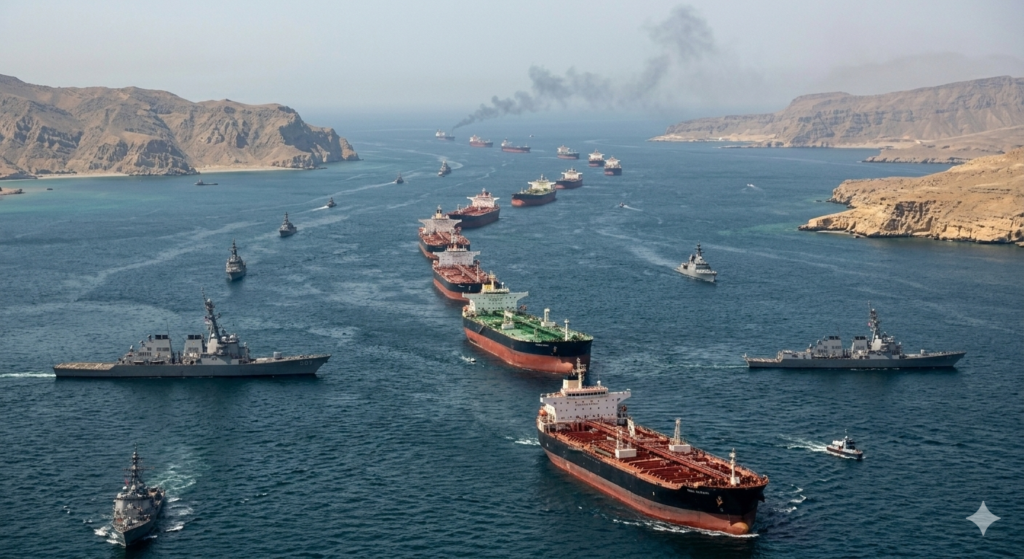
No Middle East war can be analyzed without accounting for the “black gold” that flows through the region. The Strait of Hormuz is currently the most contested piece of water on the planet.
The Energy Shockwave
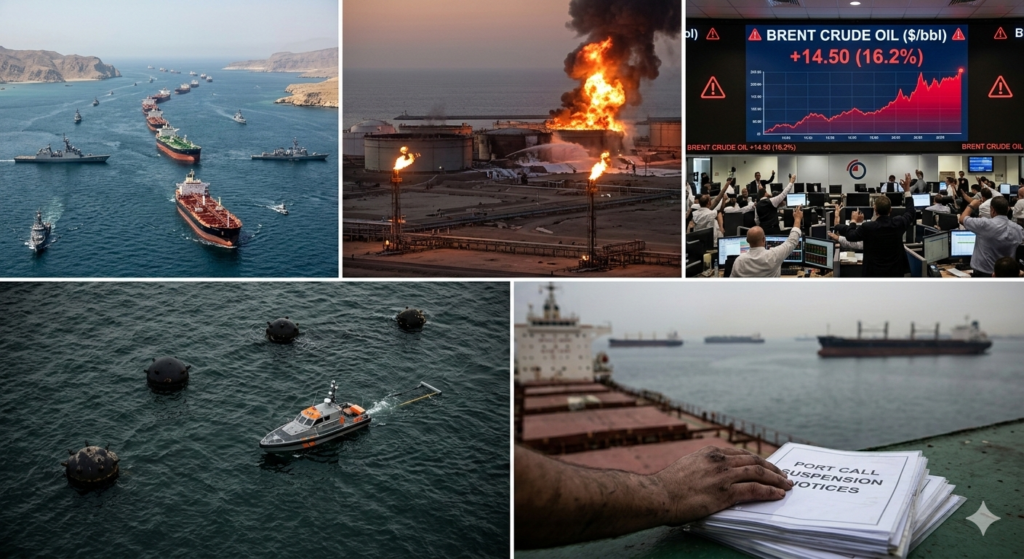
Since the start of Operation Epic Fury, global oil prices have experienced unprecedented volatility. Iran’s threat to “set the sea on fire” has led to:
- Skyrocketing Insurance Premiums: Commercial tankers are finding it nearly impossible to secure insurance for transit through the Gulf of Oman.
- Supply Chain Disruptions: As energy costs rise, the cost of manufacturing and shipping goods globally has followed suit, leading to inflationary pressures in Western markets.
The U.S. Energy Strategy
The Trump administration has countered this by tapping into the Strategic Petroleum Reserve (SPR) and incentivizing a massive domestic production surge. The goal is to “starve” the Iranian war machine of its primary source of income—oil exports—while insulating the American consumer from the worst of the price hikes.
IV. The Human Element: Casualties and Civilian Impact
War, no matter how “surgical,” carries a heavy human price. The current conflict is no exception.
U.S. and Allied Forces
The Pentagon has officially confirmed the loss of six American service members. These casualties resulted from high-intensity retaliatory strikes against U.S. bases in Kuwait and Qatar. The administration has vowed that these losses will “not be in vain,” using them as justification for the increased intensity of the upcoming “Big One.”
The Iranian People
In a notable shift in rhetoric, the U.S. government has made direct appeals to the Iranian citizenry. By urging civilians to “stay indoors” and “avoid military sites,” the U.S. is attempting to drive a wedge between the people and the regime. However, the destruction of dual-use infrastructure—such as bridges and power grids—has led to a burgeoning humanitarian crisis in cities like Isfahan and Shiraz.
V. Regional Dynamics: The “New Coalition”
The Middle East war has forced regional players to choose sides. For the first time, a “silent coalition” of Arab nations has provided logistical and intelligence support to the U.S.-Israeli effort.
- Saudi Arabia & UAE: While publicly calling for de-escalation, these nations have significantly bolstered their defensive postures, effectively creating a “wall of interceptors” against Iranian drones.
- The Levant: Lebanon and Syria have become secondary theaters, as the U.S. works to ensure that the conflict does not result in a Hezbollah-led “second front” against Israel.
VI. Conclusion: Toward a Post-Conflict Middle East
The “Big One” warned of by President Trump represents the final act of a decade-long tension. Whether Operation Epic Fury succeeds in its goal of “Peace through Strength” depends on the resilience of the remaining Iranian military and the global community’s ability to withstand the economic shock.
As the smoke clears over the coming weeks, the world will likely see a fundamentally changed region. The era of Iranian proxy dominance appears to be ending, replaced by a high-stakes, technology-driven security architecture. The question that remains is not who will win the Middle East war, but what kind of peace will be left in its wake.