
The United States and Israel have intensified their military campaign against Iran, sinking an Iranian warship in international waters and expanding air and missile strikes across multiple Middle Eastern countries, according to U.S. Defense Secretary Pete Hegseth.
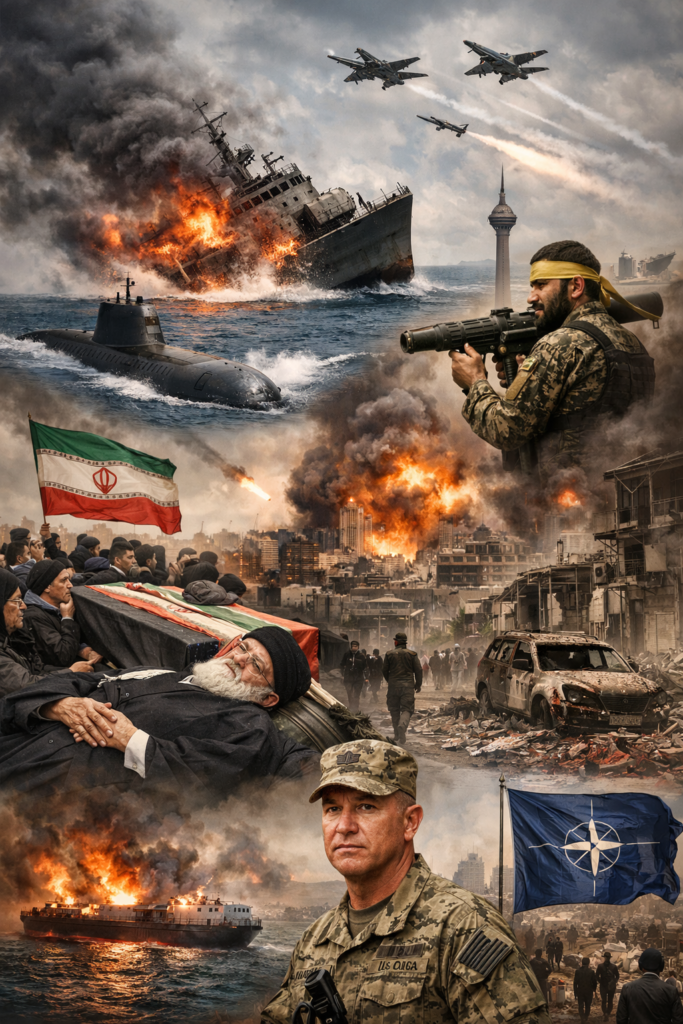
Hegseth confirmed that a U.S. submarine fired a torpedo that sank an Iranian warship in what he described as the first such attack on an enemy naval vessel since World War II. Iranian and Sri Lankan authorities said at least 32 crew members were rescued, while others were killed in the attack.
The escalation comes as both Israel and Iran continue to launch strikes across the region. Israel has targeted Iranian security and paramilitary facilities in Tehran, as well as Hezbollah positions in Lebanon, while Iran has fired missiles toward Israel, Bahrain, and Kuwait.
🔥 Rising Death Toll and Regional Instability
The conflict has killed more than 1,000 people in Iran and dozens more in Lebanon, according to regional reports. The fighting has also severely disrupted global energy markets, international shipping routes, and air travel across the Middle East.
Iranian state television announced that funeral plans for Supreme Leader Ayatollah Ali Khamenei have been delayed following reports of his death during the conflict. His death marks a major political turning point in Iran, as authorities prepare for leadership succession.
Iranian media reported widespread destruction in Tehran, including damage to residential areas. Strikes were also reported in the holy city of Qom, targeting facilities linked to clerical leadership institutions responsible for selecting Iran’s next supreme leader.
⚠️ Both Sides Signal Long War
Iranian officials have vowed to destroy Middle Eastern military and economic infrastructure in retaliation. State television has begun referring to the conflict as the “Ramadan war,” suggesting officials are preparing the public for a prolonged military confrontation.
U.S. military officials have also signaled that operations are likely to continue. Admiral Brad Cooper, the top U.S. commander in the region, said, “We’ve just begun.”
Cooper said U.S. and Israeli forces have damaged Iranian air defenses, missile launch systems, and drone operations, reducing Iran’s ability to launch large-scale attacks.
🌍 Global Concerns Grow
The war has raised alarm among international leaders, who warn that the conflict could expand further across the Middle East. NATO defenses reportedly intercepted an Iranian ballistic missile before it entered Turkish airspace, highlighting the risk of regional spillover.
Diplomatic efforts remain stalled as both sides continue to insist on military victories, while global powers urge an immediate ceasefire to prevent further escalation.